
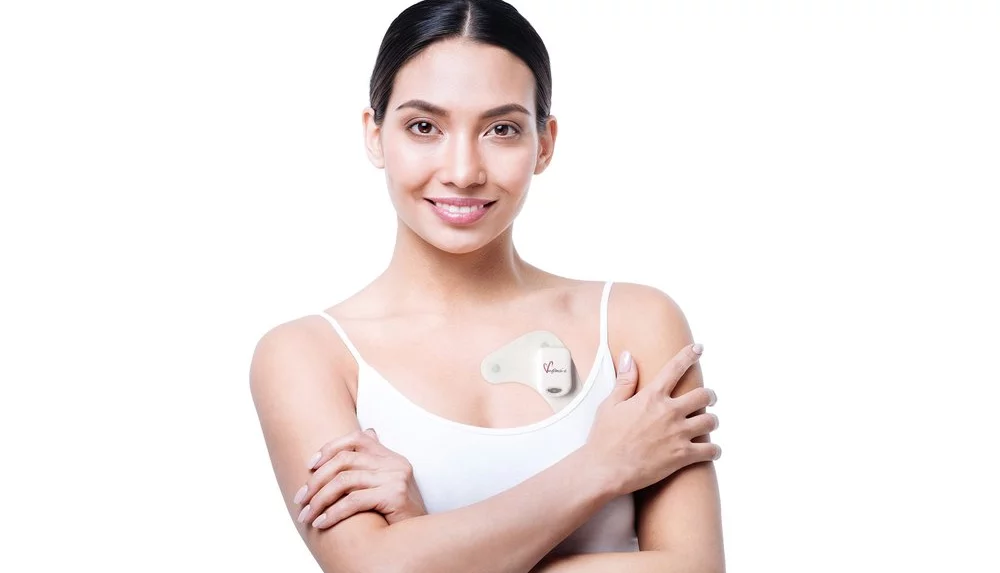
A Holter monitor is a small, portable device that continuously records your heart's electrical activity over 24 hours or longer. It provides your referring doctor with detailed information about your heart rhythm during normal daily activities — including sleeping, exercise, and work — that a standard resting ECG cannot capture.
SmartCare Diagnostics offers Holter monitor testing at our Springfield, Upper Mt Gravatt, North Lakes, Capalaba, and Ipswich clinics. For eligible Medicare cardholders, Holter monitoring is bulk billed.
What Is a Holter Monitor?
A Holter monitor is a battery-operated, portable electrocardiogram (ECG) device. Small adhesive electrodes are placed on your chest and connected by thin wires to a recording unit about the size of a small mobile phone. The device records every heartbeat continuously while you go about your normal activities.
Unlike a standard ECG, which captures your heart rhythm for only a few seconds during a clinic visit, a Holter monitor records continuously over 24 hours or more. This extended recording period is critical for detecting heart rhythm abnormalities that may occur intermittently — during sleep, after meals, during physical activity, or at unpredictable times.
When Might Your Doctor Refer You for a Holter Monitor?
Your GP or cardiologist may refer you for Holter monitoring for a range of clinical reasons. Common indications include:
- Palpitations — the sensation of your heart racing, skipping beats, fluttering, or pounding, particularly if symptoms come and go unpredictably
- Unexplained dizziness or lightheadedness — which may be caused by abnormal heart rhythms
- Episodes of fainting (syncope) or near-fainting — to determine whether a heart rhythm disturbance is the cause
- Assessment of known arrhythmias — to evaluate the frequency, duration, and type of abnormal rhythm
- Monitoring after starting heart medication — to assess whether medication is controlling the rhythm effectively
- Post-cardiac procedure monitoring — after ablation, pacemaker implantation, or other cardiac interventions
- Assessment of chest pain — where a rhythm disturbance may be contributing to symptoms
- Screening for atrial fibrillation — a common heart rhythm disorder that increases stroke risk
What to Expect
At Your Fitting Appointment
The fitting appointment is straightforward and takes approximately 15 to 20 minutes. A cardiac technician will:
- Clean small areas of your chest where the electrodes will be placed
- Attach adhesive electrodes — typically 5 to 7 — to your chest
- Connect the electrodes via thin wires to the Holter recording unit
- Show you how to wear the device comfortably — the unit is typically clipped to your belt or worn around your neck on a lanyard
- Explain how to keep a simple diary of your activities and any symptoms during the recording period
During the Recording Period
Once the Holter monitor is fitted, you go about your normal daily activities. This is the purpose of the test — to record your heart rhythm during real-world conditions, not in a clinical setting.
During the recording period:
- Continue your normal routine — work, exercise, sleep, meals — unless your referring doctor has advised otherwise
- Keep the symptom diary provided — note the time and activity if you experience palpitations, dizziness, chest pain, or other symptoms
- Do not shower, bathe, or swim while wearing the monitor — the electrodes and device are not waterproof
- Avoid electric blankets and magnets, which can interfere with the recording
- Sleep as normally as possible — the overnight recording is clinically important
Returning the Monitor
After the recording period — typically 24 hours — you return to the clinic to have the monitor removed. This takes only a few minutes. The recording is then downloaded and analysed by a cardiologist, who generates a detailed report for your referring doctor.
How Long Does a Holter Monitor Record For?
Standard Holter monitoring records for 24 hours. In some cases, your referring doctor may request an extended recording period of 48 hours or longer if the symptoms being investigated are infrequent.
For symptoms that occur very rarely — less than once a week — an event monitor or longer-term recording device may be more appropriate. Your referring doctor will advise which monitoring approach is best suited to your symptoms.
After the Test — Results
The Holter recording is analysed by a cardiologist who reviews the entire recording for rhythm abnormalities, including:
- Premature beats — extra or skipped heartbeats
- Tachycardia — episodes of abnormally fast heart rate
- Bradycardia — episodes of abnormally slow heart rate
- Atrial fibrillation or flutter — irregular heart rhythms originating in the upper chambers
- Pauses — periods where the heart briefly stops beating
- Correlations between symptoms recorded in your diary and the heart rhythm at that time
A report is generated and sent to your referring doctor, typically within 48 to 72 hours. Your referring doctor will discuss the results with you and advise on any treatment or follow-up that may be needed.
Is Holter Monitoring Comfortable?
The Holter monitor is lightweight, small, and designed to be worn during normal daily activities. Most patients find it comfortable and unobtrusive. The electrodes may cause minor skin irritation in some people, particularly if you have sensitive skin. The wires are thin and can be tucked under clothing.
The main inconvenience is being unable to shower for the duration of the recording. Some patients find sleeping with the device slightly uncomfortable, but most adapt quickly.
Where to Have a Holter Monitor in South-East Queensland
SmartCare Diagnostics offers Holter monitor testing at five convenient locations:
- Springfield — SmartCare Diagnostics, Springfield Central
- Upper Mt Gravatt — SmartCare Diagnostics
- North Lakes — SmartCare Diagnostics
- Capalaba — SmartCare Diagnostics
- Ipswich — SmartCare Diagnostics
For eligible Medicare cardholders, Holter monitoring is bulk billed. A valid referral from your GP or specialist is required.
To book a Holter monitor or refer a patient, contact SmartCare Diagnostics on [email protected] or visit smartcd.com.au.
Frequently Asked Questions
Understanding Your Echocardiogram | Exercise Stress Echocardiogram | 24-Hour Blood Pressure Monitoring | Cardiac Testing at SmartCare Diagnostics
*This article is for general information and educational purposes only. It is not a substitute for professional medical advice, diagnosis or treatment. Always follow the guidance of your GP, specialist or other qualified health professional regarding any questions about your health. Please call triple zero (000) immediately if you believe your symptoms are life-threatening.
Accessible diagnostic testing. Bulk billed for eligible Medicare cardholders.