
Getting breathless walking to the letterbox, feeling worn out after normal daily tasks or noticing your ankles becoming swollen can be unsettling. You might notice you need extra pillows at night to prop you up because lying flat makes breathing feel harder.
These symptoms do not automatically mean heart failure. They can have several causes, but when they persist, your GP may recommend heart testing to find out what is happening.
When heart testing is recommended, a clinic closer to home can make the process easier to fit around work, family and everyday life. SmartCare Diagnostics accepts all referrals, with bulk billing available for eligible Medicare card holders.
What Is Heart Failure?
Heart failure does not mean the heart has stopped. It means the heart is not pumping or filling as well as the body needs. Changes or symptoms you may notice include:
- Shortness of breath, especially during activity or when lying flat
- Tiredness or reduced ability to exercise
- Swollen ankles or legs
- A racing or irregular heartbeat
- Coughing or waking overnight feeling breathless
If you are experiencing any of the symptoms outlined above, or they are getting worse, please speak with your GP or health team as soon as you can.
Why Heart Failure Can Be Difficult to Recognise
Heart failure symptoms can build slowly. People usually first notice they are avoiding stairs, stopping more often during a walk or feeling unusually drained after work.
It is easy to put these changes down to getting older, being unfit, poor sleep or recovering from an illness. Swollen ankles may also be dismissed as standing for too long or hot weather.
This is one reason testing matters. Symptoms alone cannot show how well the heart is working or identify the cause.
How Does an Echocardiogram Help?
An echocardiogram is an ultrasound test that creates moving images of the heart. From it, we can assess the heart’s chambers, valves and pumping function without surgery or radiation.
An echocardiogram may be recommended when heart failure is suspected or recently diagnosed, especially to get a measurement known as left ventricular ejection fraction, which describes how much blood the left side of the heart pumps out with each beat.
An echocardiogram helps us understand:
- How strongly the heart is pumping
- If the heart muscle has become enlarged or weakened
- If a heart valve problem may be contributing to symptoms
- When further investigation or specialist review is needed
What To Expect During an Echocardiogram
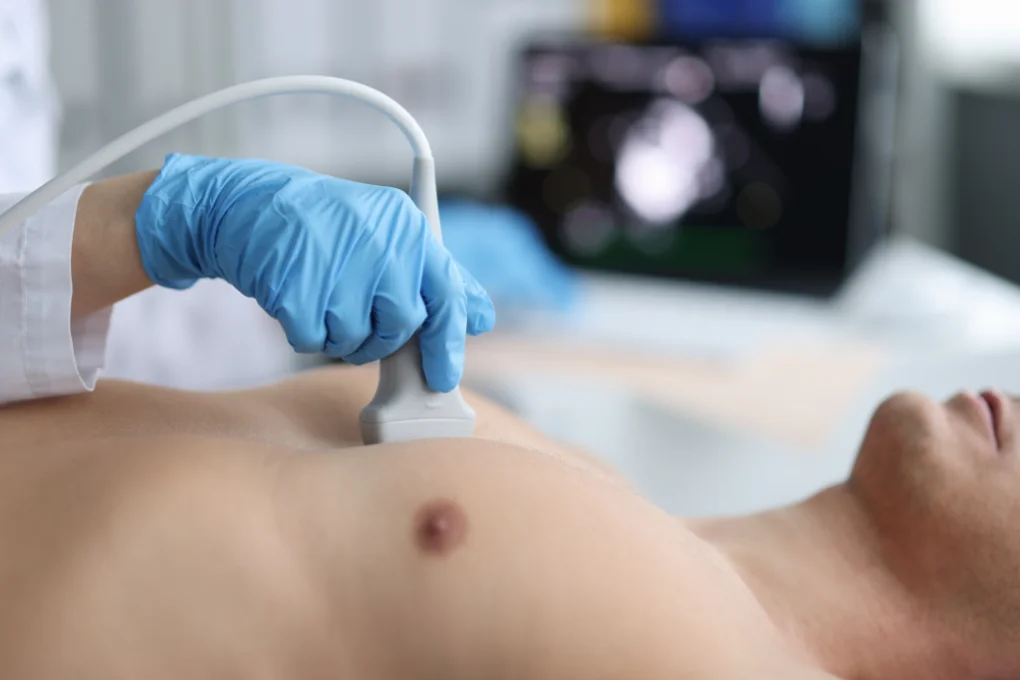
An echocardiogram is a non-invasive test. You will usually be asked to remove clothing from the upper body and lie on an examination bed. A sonographer places gel on the chest and moves a handheld ultrasound probe across different positions to collect images of the heart.
You may be asked to change position or briefly hold your breath so clearer images can be captured. Examination is not painful, though gentle pressure from the probe may feel slightly uncomfortable in some areas.
After the test, the images are reviewed and a report is sent to your referring doctor, who will explain what the results mean for you.
Can an Echocardiogram Show What Is Causing Symptoms?
An echocardiogram can help identify heart-related reasons for breathlessness, fatigue or swelling. These can include reduced pumping function, valve problems or changes in the size or movement of the heart chambers.
You may also be referred for other investigations, like an ECG, to record the heart’s electrical activity, and monitoring tests may be used if palpitations or irregular heart rhythms are part of the concern.
When To Talk to Your GP About Cardiac Testing
Book an appointment with your GP if you have ongoing symptoms such as:
- Breathlessness during usual activities
- Unexplained tiredness
- Swelling in your ankles or legs
- Palpitations
- Discomfort when lying flat
Your GP can assess your symptoms and provide a referral for cardiac investigations at SmartCare Diagnostics if needed.
Cardiac Testing with SmartCare Diagnostics
SmartCare Diagnostics provides bulk-billed cardiac testing for eligible Medicare card holders, with all referrals accepted. Appointments are also usually available within the week, and routine reports are returned to the referring doctor within 48 hours, with urgent findings communicated promptly.
Waiting for answers can be frustrating, especially when symptoms affect sleep, work, exercise and family routines. Accessing referred cardiac testing at a SmartCare Diagnostics near you may help reduce extra travel and help inform your doctor to plan your next steps.
Book Your Cardiac Testing
If your GP or specialist has recommended heart testing, SmartCare Diagnostics provides access to cardiac investigations across multiple South East Queensland locations.
Or if you would like to check appointment availability, referral requirements or available cardiac investigations specific to our locations, get in touch with our friendly team.
Contact Springfield Contact Ipswich Contact Mt Gravatt
Contact North Lakes Contact Capalaba
Frequently Asked Questions
Do I need a referral for cardiac testing?
Yes. Your GP or specialist can assess your symptoms and provide a referral for the investigation they recommend.
Is an echocardiogram painful?
An echocardiogram is non-invasive and does not use radiation. You may feel some pressure and discomfort from the ultrasound probe on your chest during the examination.
Is cardiac testing bulk billed at SmartCare Diagnostics?
Cardiac investigations are bulk billed for eligible Medicare card holders with a valid referral. Contact the clinic or booking team for details related to your appointment.
References
Heart Foundation. (2024). What is heart failure? Heart Foundation. https://www.heartfoundation.org.au/your-heart/heart-failure
Heart Foundation. (2018). For professionals: Heart failure clinical guidelines | Heart Foundation. Heartfoundation.org.au. https://www.heartfoundation.org.au/for-professionals/heart-failure-clinical-guidelines
Health Direct Australia. (2020). Heart failure. Health Direct. https://www.healthdirect.gov.au/heart-failure
Atherton, J. J., Sindone, A., De Pasquale, C. G., Driscoll, A., MacDonald, P. S., Hopper, I., Kistler, P., Briffa, T. G., Wong, J., Abhayaratna, W. P., Thomas, L., Audehm, R., Newton, P. J., OˈLoughlin, J., Connell, C., & Branagan, M. (2018). National Heart Foundation of Australia and Cardiac Society of Australia and New Zealand: Australian clinical guidelines for the management of heart failure 2018. Medical Journal of Australia, 209(8), 363–369. https://doi.org/10.5694/mja18.00647
CSANZ Resource View. (2025). Csanz.edu.au. https://www.csanz.edu.au/resource?resource=200&
*This article is for general information and educational purposes only. It is not a substitute for professional medical advice, diagnosis or treatment. Always follow the guidance of your GP, specialist or other qualified health professional regarding any questions about your health. Please call triple zero (000) immediately and ask for an ambulance if you have difficulty breathing or chest pain that is severe, worsening or lasts longer than 10 minutes.
Accessible diagnostic testing. Bulk billed for eligible Medicare cardholders.