
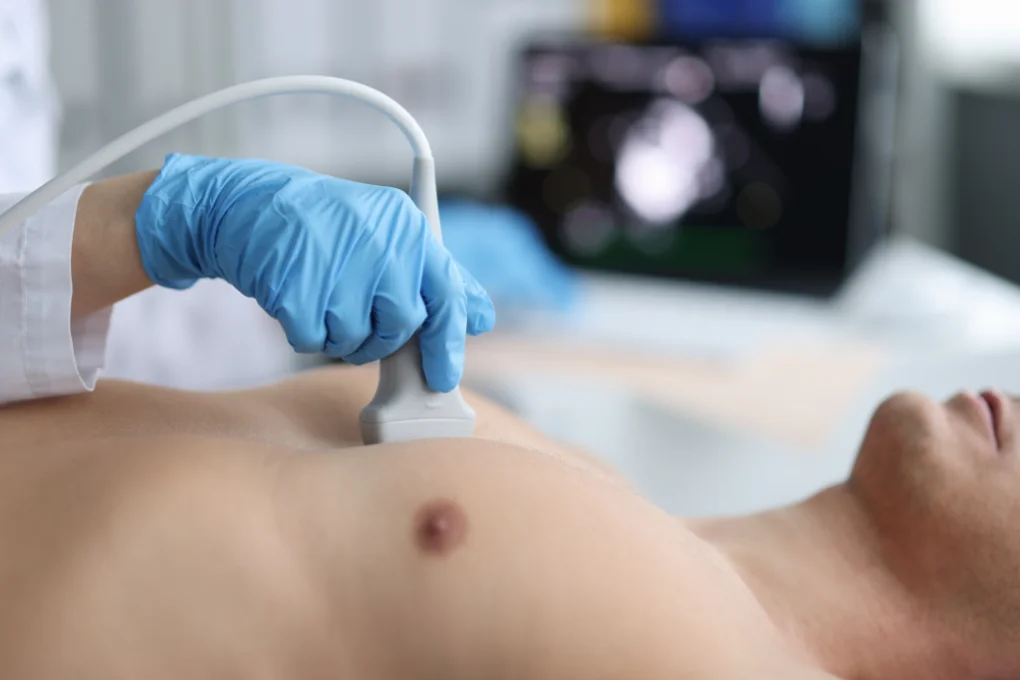
An exercise stress echocardiogram — commonly called a stress echo — is one of the most effective non-invasive tests for assessing how your heart performs under physical stress. It combines ultrasound imaging of your heart with monitored exercise on a treadmill, giving your referring doctor a detailed picture of heart function both at rest and during exertion.
SmartCare Diagnostics performs exercise stress echocardiograms at our Springfield, Upper Mt Gravatt, North Lakes, Capalaba, and Ipswich clinics. For eligible Medicare cardholders, stress echo testing is bulk billed.
What Is an Exercise Stress Echocardiogram?
A stress echo is a two-part test. In the first part, a cardiac sonographer uses an ultrasound probe to take images of your heart while you are at rest. These resting images capture your heart's structure, valve function, and how your heart muscle contracts.
In the second part, you exercise on a treadmill under medical supervision. The treadmill starts slowly and increases in speed and incline every few minutes. The goal is to raise your heart rate to a target level based on your age and fitness. Immediately after exercise, a second set of ultrasound images is taken while your heart rate remains elevated.
Comparing the two sets of images allows the reporting cardiologist to identify areas of the heart muscle that may not be receiving adequate blood flow during exertion — which can indicate narrowing or blockages in the coronary arteries.
How Is a Stress Echo Different from a Standard Echocardiogram?
A standard echocardiogram — sometimes called a resting echo — only captures images of the heart at rest. This is valuable for assessing heart structure, valve function, and overall pump function, but it may not reveal problems that only become apparent when the heart is working harder.
An exercise stress echocardiogram adds the critical exercise component. Some cardiac conditions — particularly coronary artery disease — may show no signs at rest but produce abnormal wall motion patterns under stress. The stress echo is designed to detect these changes.
A stress echo also differs from a standard exercise stress test (treadmill ECG), which records only the heart's electrical activity during exercise. The stress echo adds ultrasound images, providing your cardiologist with significantly more information about how the heart muscle is functioning.
When Might Your Doctor Refer You for a Stress Echo?
Your GP or cardiologist may refer you for an exercise stress echocardiogram for a range of clinical reasons. Common indications include:
- Chest pain or discomfort on exertion — to assess whether reduced blood flow to the heart is the cause
- Shortness of breath with physical activity — to evaluate whether the heart is pumping effectively under stress
- Assessment of known coronary artery disease — to determine severity and guide treatment decisions
- Pre-surgical cardiac clearance — to assess cardiac risk before a planned surgery
- Monitoring after cardiac procedures — such as coronary stenting or bypass surgery
- Evaluating heart valve disease — to understand how valve function changes during exercise
- Cardiac risk assessment — in patients with risk factors such as high blood pressure, diabetes, family history of heart disease, high cholesterol, or smoking
- Assessing exercise tolerance — to determine how much physical activity is safe
What to Expect Before Your Stress Echo
Your referring doctor will provide specific preparation instructions. General guidelines for most stress echo appointments include:
- Eat a light meal at least two hours before the test — avoid heavy meals
- Wear comfortable clothing and walking shoes suitable for treadmill exercise
- Bring a list of your current medications — some medications may need to be adjusted or paused before the test, as directed by your referring doctor
- Avoid caffeine for at least 12 hours before the test, including tea, coffee, and caffeinated soft drinks
- Allow approximately 45 to 60 minutes for the full appointment
What Happens During the Test
When you arrive, a cardiac sonographer will explain the procedure and attach ECG electrodes to your chest. These remain in place throughout the test to monitor your heart's electrical activity continuously.
You will lie on your left side while the sonographer takes resting ultrasound images of your heart. A blood pressure cuff will be placed on your arm for periodic readings.
You will then step onto the treadmill. The treadmill starts at a slow walking pace and increases in speed and incline every few minutes. A supervising doctor is present throughout the exercise phase. You will be asked to exercise until you reach your target heart rate, or until you need to stop due to fatigue, discomfort, or other symptoms.
Immediately after exercise, you return to the bed and the sonographer quickly captures a second set of ultrasound images while your heart rate is still elevated. Speed is important at this stage — the images need to be taken before the heart rate drops. You may be asked to hold your breath briefly during imaging.
After a short recovery period, a final set of images may be taken. Your blood pressure and ECG will continue to be monitored for several minutes.
After the Test
Most patients can resume normal activities immediately after the test. The cardiologist will review the resting and stress images side by side and generate a detailed report. This report is sent electronically to your referring doctor, typically within 24 to 48 hours.
Your referring doctor will discuss the results with you and advise on any follow-up or treatment that may be needed.
What If I Cannot Exercise on a Treadmill?
For patients who are unable to walk on a treadmill due to mobility limitations, joint problems, or other physical conditions, an alternative test called a dobutamine stress echocardiogram may be available. This uses a medication administered through an intravenous line to increase the heart rate, simulating the effect of exercise. Your referring doctor will advise which test is appropriate.
Is a Stress Echo Safe?
Exercise stress echocardiography is a well-established, non-invasive test with an excellent safety profile. The test uses ultrasound — not radiation — to image the heart. Serious complications are very rare, occurring in fewer than 1 in 10,000 tests. A qualified doctor supervises every exercise stress echo to manage any issues that may arise.
Where to Have a Stress Echo in South-East Queensland
SmartCare Diagnostics offers exercise stress echocardiograms at five locations across south-east Queensland:
- Springfield — SmartCare Diagnostics, Springfield Central
- Upper Mt Gravatt — SmartCare Diagnostics
- North Lakes — SmartCare Diagnostics
- Capalaba — SmartCare Diagnostics
- Ipswich — SmartCare Diagnostics
For eligible Medicare cardholders, stress echo testing is bulk billed. A valid referral from your GP or specialist is required.
FAQs about Exercise Stress Echocardiograms
To book a stress echo or refer a patient, contact SmartCare Diagnostics on [email protected] or visit smartcd.com.au.
Other questions? CONTACT OUR TEAM
Ready to book in? BOOK YOUR STRESS ECHO
*This article is for general information and educational purposes only. It is not a substitute for professional medical advice, diagnosis or treatment. Always follow the guidance of your GP, specialist or other qualified health professional regarding any questions about your health. Please call triple zero (000) immediately if you believe your symptoms are life-threatening.
Accessible diagnostic testing. Bulk billed for eligible Medicare cardholders.